
Ceyhan Mosque Restoration
The Ceyhan Mosque, located in the Köprübaşı neighborhood of Elbistan district in Kahramanmaraş, on the banks of the Ceyhan River, and approximately 175 years old, suffered severe damage in the earthquakes of February 6, 2023. As part of a project carried out by the General Directorate of Foundations, the mosque's wooden frame and stone minaret are being rebuilt in accordance with the architectural style of the period.
A 175-Year-Old Mosque on the Banks of the Ceyhan River
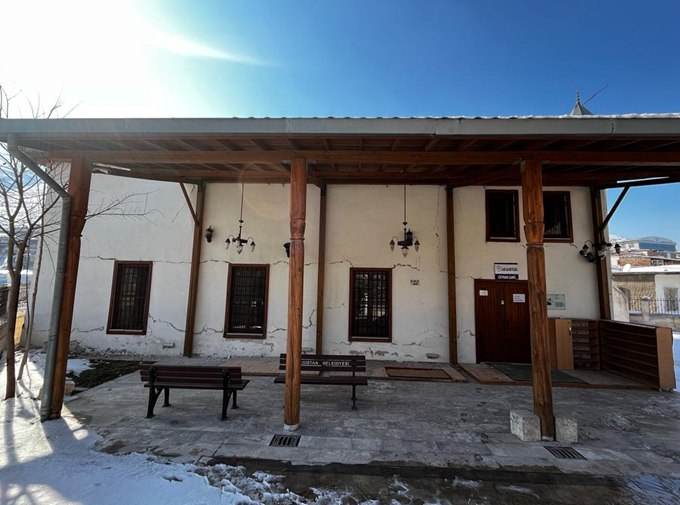
Located in the Köprübaşı neighborhood of Elbistan district in Kahramanmaraş, right on the banks of the Ceyhan River, the Ceyhan Mosque (Lower Mosque) is a historical place of worship believed by the local people to have been built in 1850. With approximately 175 years of history as of 2026, it is one of the region's important religious and architectural heritage sites.
The structure features a timber frame (hımış) load-bearing system, adobe and rubble stone infill walls, and a wooden minaret approximately 14 meters high. With these characteristics, it constitutes a typical example of 19th-century Ottoman rural mosque architecture.
The mosque was closed for worship in 2011 due to structural safety concerns; it reopened in 2015 following renovation work.
The earthquakes that occurred on February 6, 2023, centered in Kahramanmaraş, severely damaged the mosque's structural system, making it the subject of a new restoration/reconstruction process.
Traces of the February 6, 2023 Earthquake
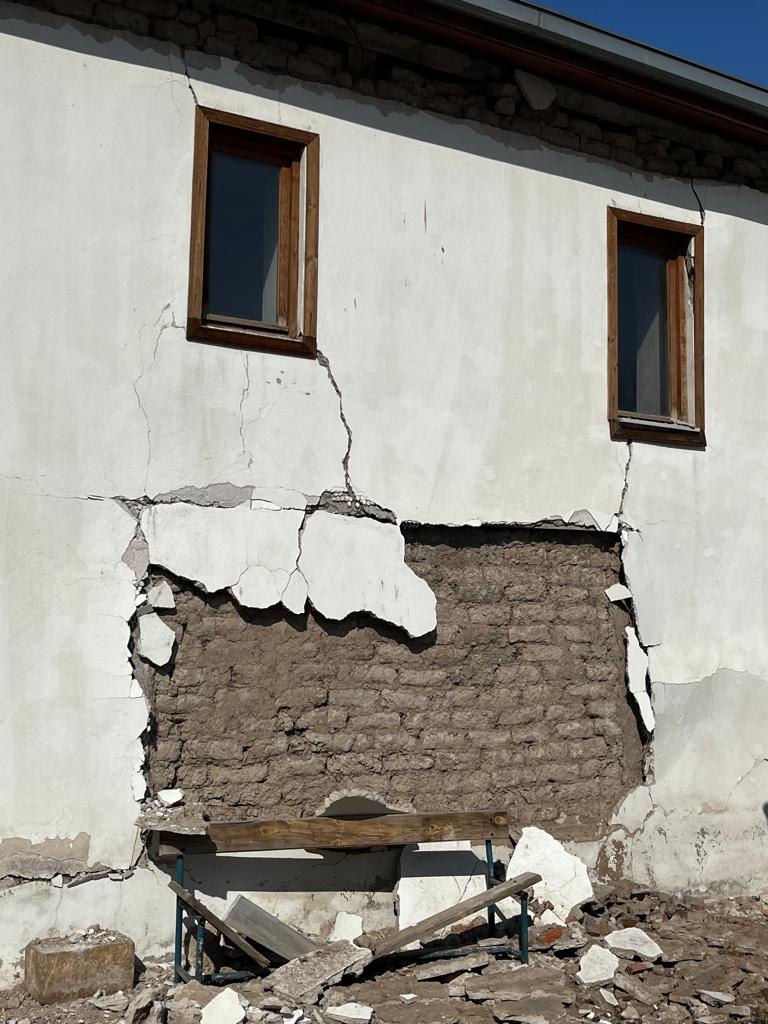
Inspections conducted after the earthquakes centered in Kahramanmaraş revealed widespread plaster peeling and deep cracks on the mosque's facade and the entrance portico with wooden columns. Partial collapses were observed in the mudbrick-filled sections, severely compromising the structural integrity of the building.
Official Damage Assessment Form Findings
According to the records of the General Directorate of Foundations' "06 February 2023 Earthquake Foundation Cultural Heritage Damage Assessment Form," the building is registered under the Gaziantep Regional Directorate, Kahramanmaraş Province, Elbistan District, Köprübaşı Neighborhood, block 371, parcel 14, with a surface area of 365 m².
In the initial assessment (19.02.2023), the structure was classified as "Severely Damaged (Partial Collapses Present)"; its load-bearing system was recorded as masonry, and its material as natural stone.
In a second assessment (March 7, 2023, by Taha Demirci and Özge Nihan Güleken), the timber frame/half-timbered section of the structure was evaluated as "Moderately Damaged"; the load-bearing system material was noted as wood and adobe infill, and attention was drawn to cracks in the infill walls.
This pair of findings reveals that both the masonry/stone and timber frame sections of the mosque were evaluated separately, and that the structure has a mixed damage profile.
Highlights from the Meeting Minutes
According to the minutes of the 1st Scientific Committee Meeting dated 24.09.2025, it was decided that the original wooden beams and posts in the sanctuary would be preserved and dismantled, and the building would be partially demolished for reconstruction. It was decided that a foundation excavation would be carried out, a Foundation Application Project would be prepared, and a structural wooden skeleton would be created and clad with rubble stone masonry.
The minutes of the 3rd Scientific Committee Meeting dated 13.02.2026 stated that the minaret should be rebuilt in stone in accordance with the period's architecture and incorporated into the project, the body walls should be constructed with a timber frame system using adobe/brick infill, and a cross-section showing the structure's relationship with the Ceyhan River should be added to the project. It was also decided to send an official letter to the State Hydraulic Works (DSİ) for information regarding the river's flood levels.
It was also decided that the garden wall property boundaries should be clarified through correspondence with the administration, that the foundation walls uncovered during the excavation should be included in the project and preserved, and that the ground improvement projects should be completed and submitted to the Scientific Committee.
The Re-emergence of the Stone Minaret
In accordance with the decision of the Scientific Committee, a stone minaret, in keeping with the architectural style of the period, is being constructed to replace the heavily damaged wooden minaret. The stone cutting and workmanship are being carried out meticulously, and the minaret is being gradually raised to restore the mosque's original silhouette.
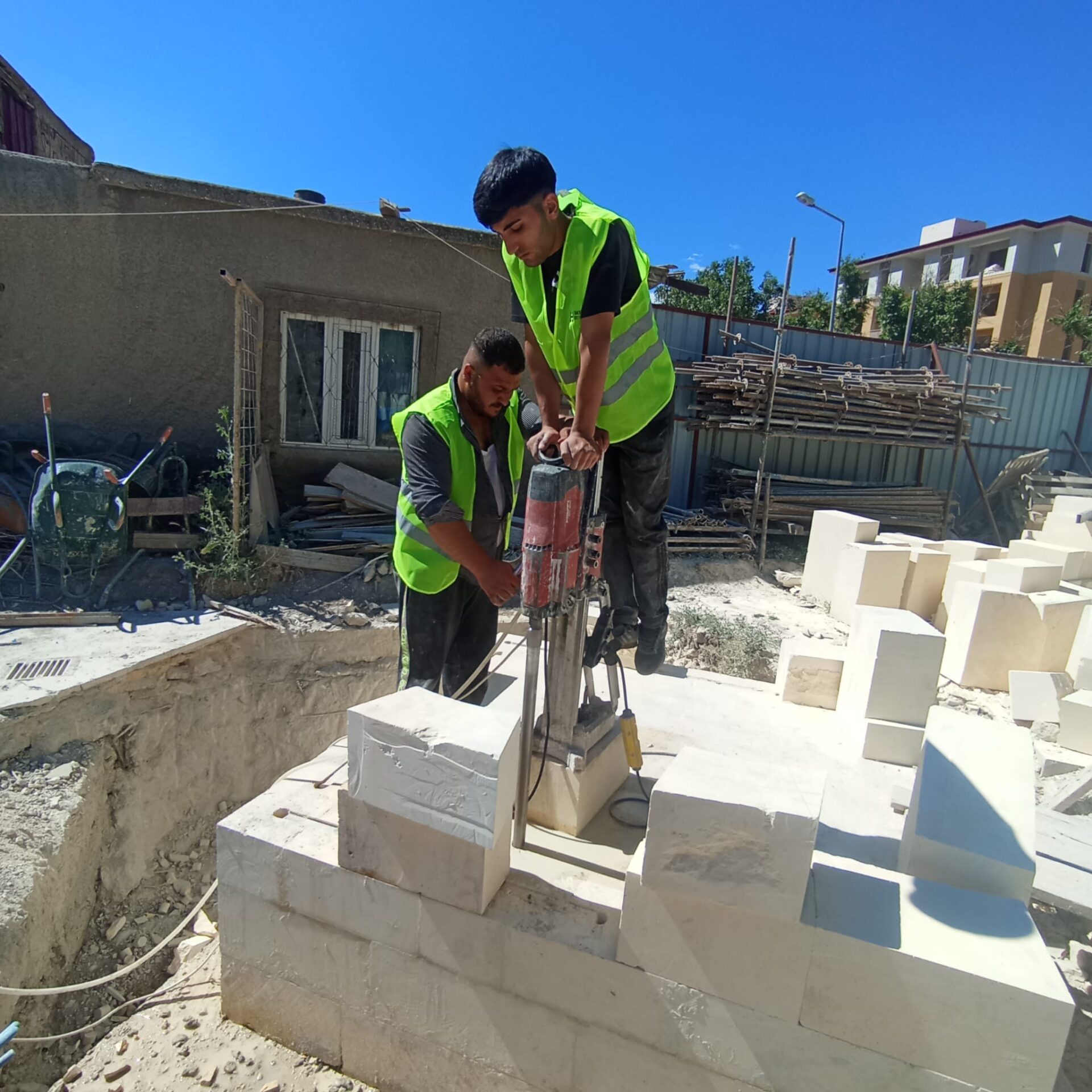
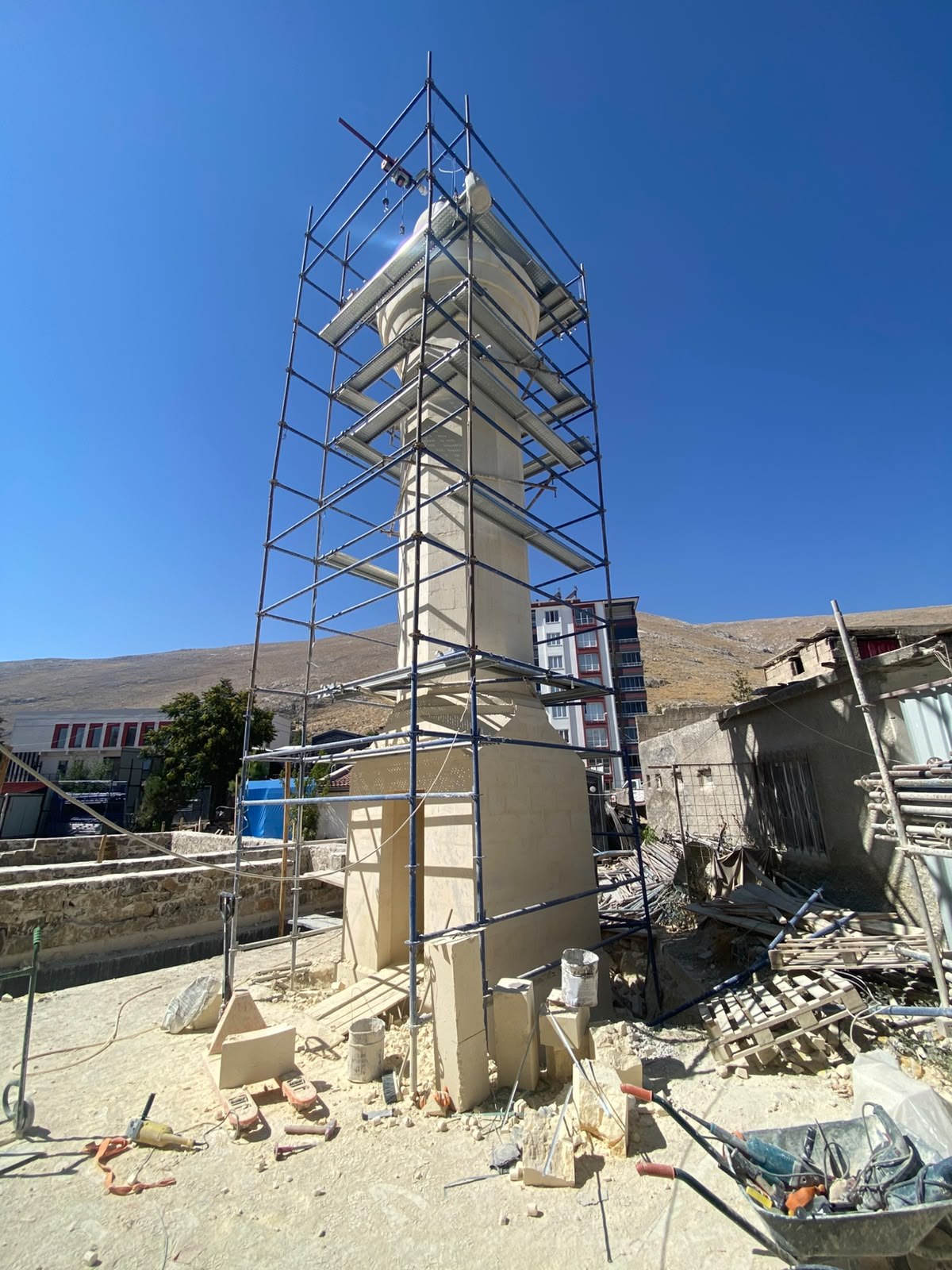
Latest views from the construction site.
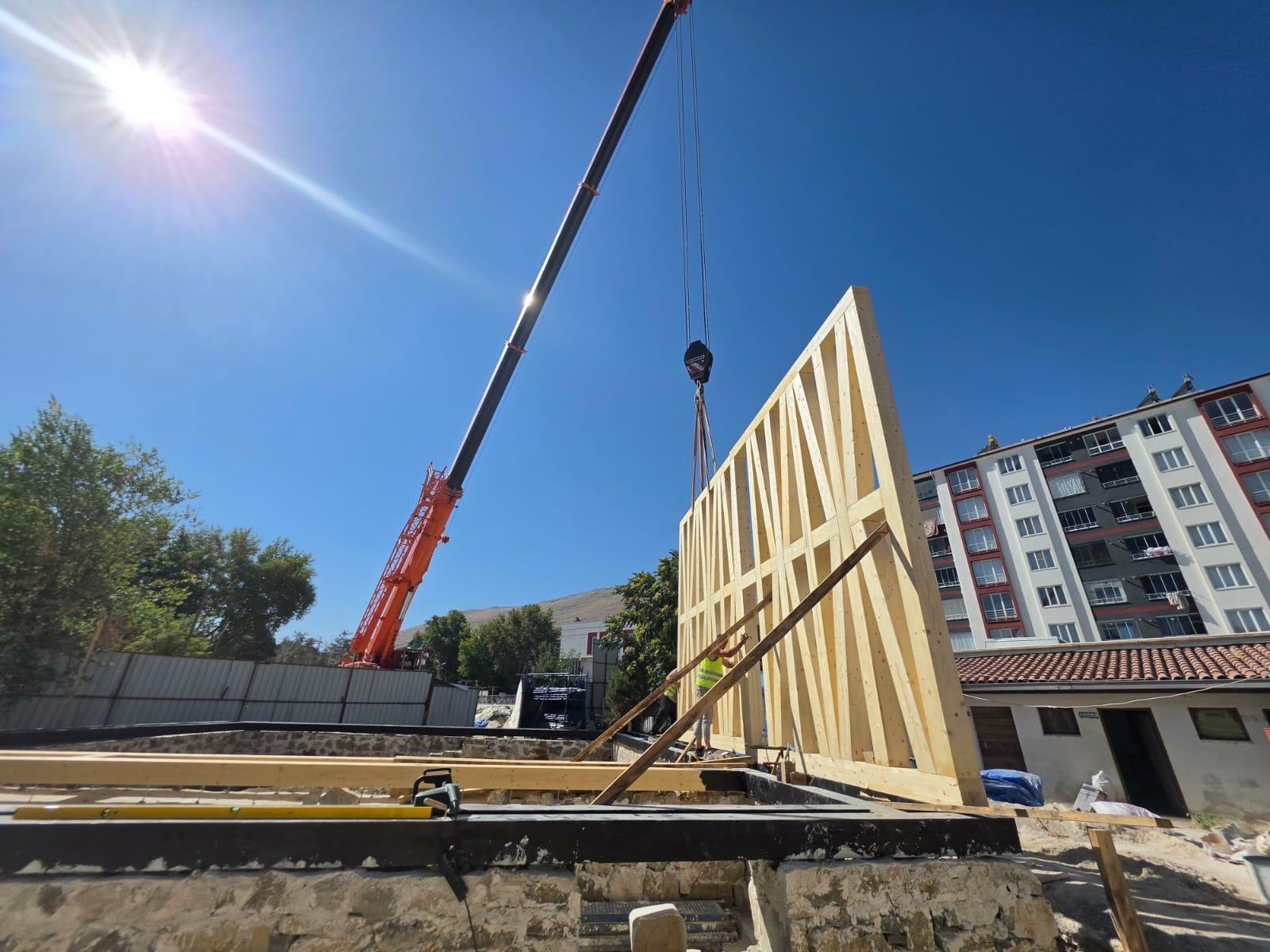
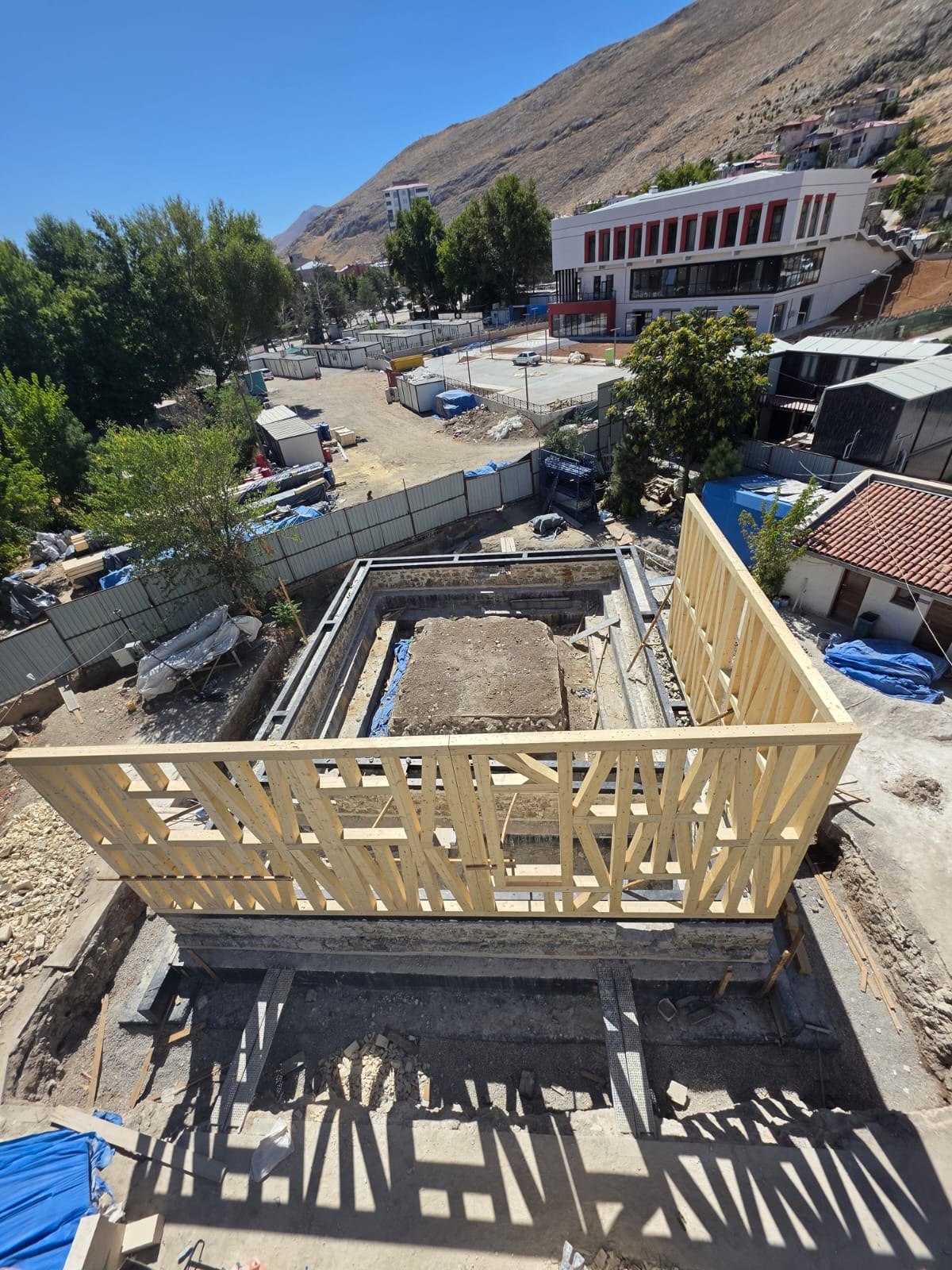
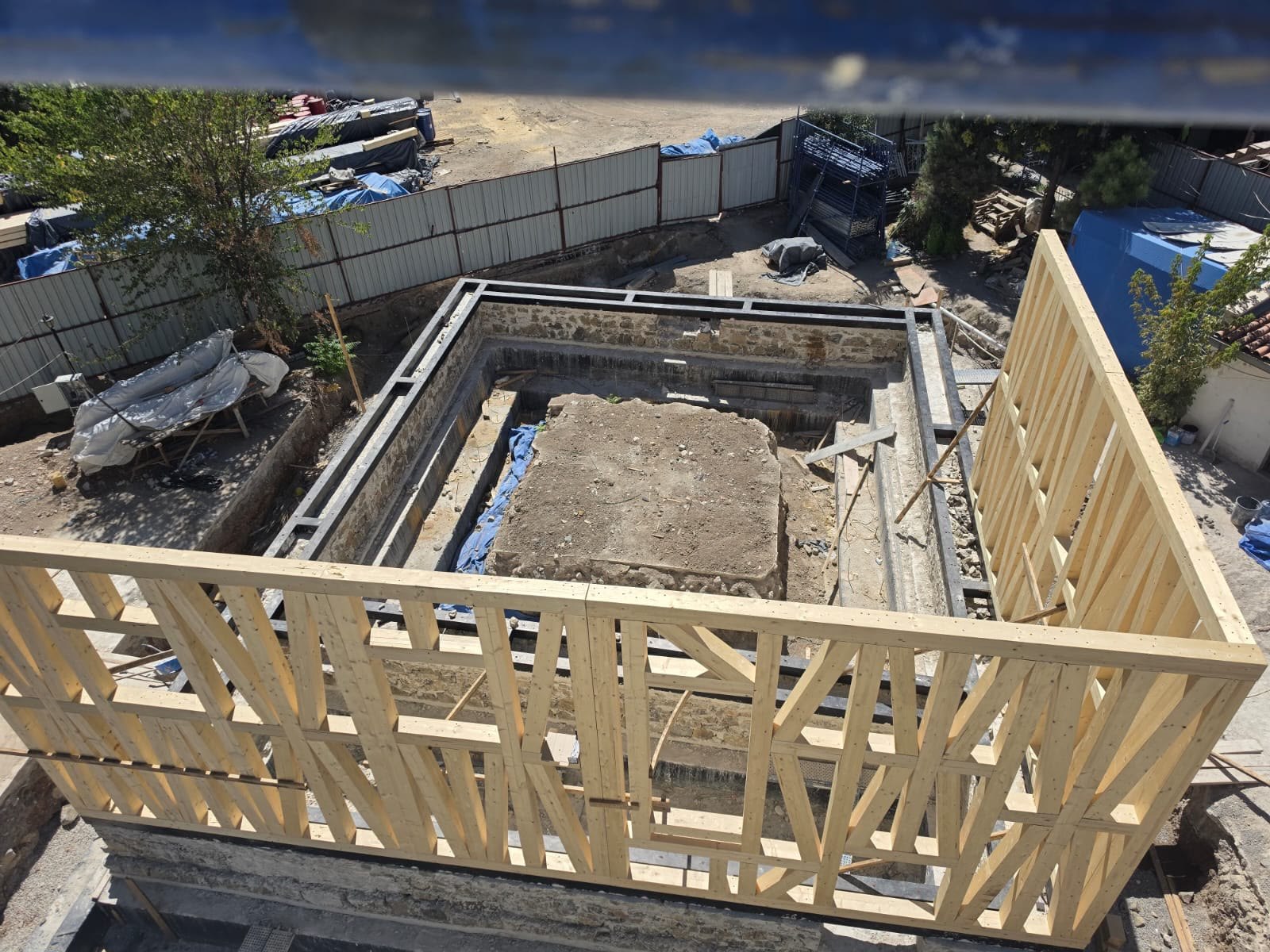
As part of the ongoing work on site, the wooden frame panels of the mosque are being prepared and mounted onto the stone foundation with the help of a crane. Aerial images reveal the overall progress of the construction, including the foundation and courtyard arrangement.
Stakeholders of Restoration
Contractor
Taksim Yapı Mimarlık İnşaat Restorasyon Turizm San. ve Tic. Ltd. Şti.
Control Team
Çiğdem Yeşilyurt (Architect), Süleyman Enez (Civil Engineer, MSc)
Scientific Committee
Prof. Dr. Kemal Kutgün Eyüpgiller, Assoc. Prof. Dr. Mehmet Selim Ökten, Prof. Dr. Bekir Eskici, Erdoğan Tunç, Yahya Dilsizoğlu
A Mosque Rebuilt from the Traces of an Earthquake
The restoration of Ceyhan Mosque is a comprehensive reconstruction process aimed at preserving its original architectural character, carried out simultaneously through official damage assessments, Scientific Committee decisions, and on-site implementation studies. The work, conducted under the contract, is expected to be completed and the mosque reopened for worship on approximately December 1, 2026.