
Eshab-ı Kehf Complex (Mosque and Ribat) Restoration and Conservation Project
In Eshab-ı Kehf Complex, located in the Afşin district of Kahramanmaraş and associated with the story told in the Quran's Surah al-Kahf, work continues — in line with the decisions of the Scientific Committee — on preparing the restoration projects for the mosque and ribat, together with the restoration/conservation implementation itself.
The complex, identified with the story told in the Surah Al-Kahf of the Quran, has a layered structural integrity dating from the Anatolian Seljuk period to the present day.
Located within the borders of Afşin district, the complex, which is associated with the story of young men who, according to belief, took refuge in a cave to protect their faith, is considered sacred in both Christian and Islamic traditions. According to sources, a small Byzantine-era church initially stood at the cave entrance; construction, initiated by Nusretüddin Hasan Bey, the Emir of Maraş during the Anatolian Seljuk period, between December 1215 and January 1216, continued until 1234, resulting in the construction of a mosque, ribat (fortified outpost), and caravanserai around the cave.
Expanded during the Dulkadirid Principality period (1500-1510) with the addition of a madrasa, a buk'a (a type of prayer hall), and a women's mosque, the complex acquired its present general layout with the addition of the "Pasha's Pavilion" in 1531 during the Ottoman period; its foundation status was preserved throughout the Ottoman period, and the existence and function of the complex have continued to this day.
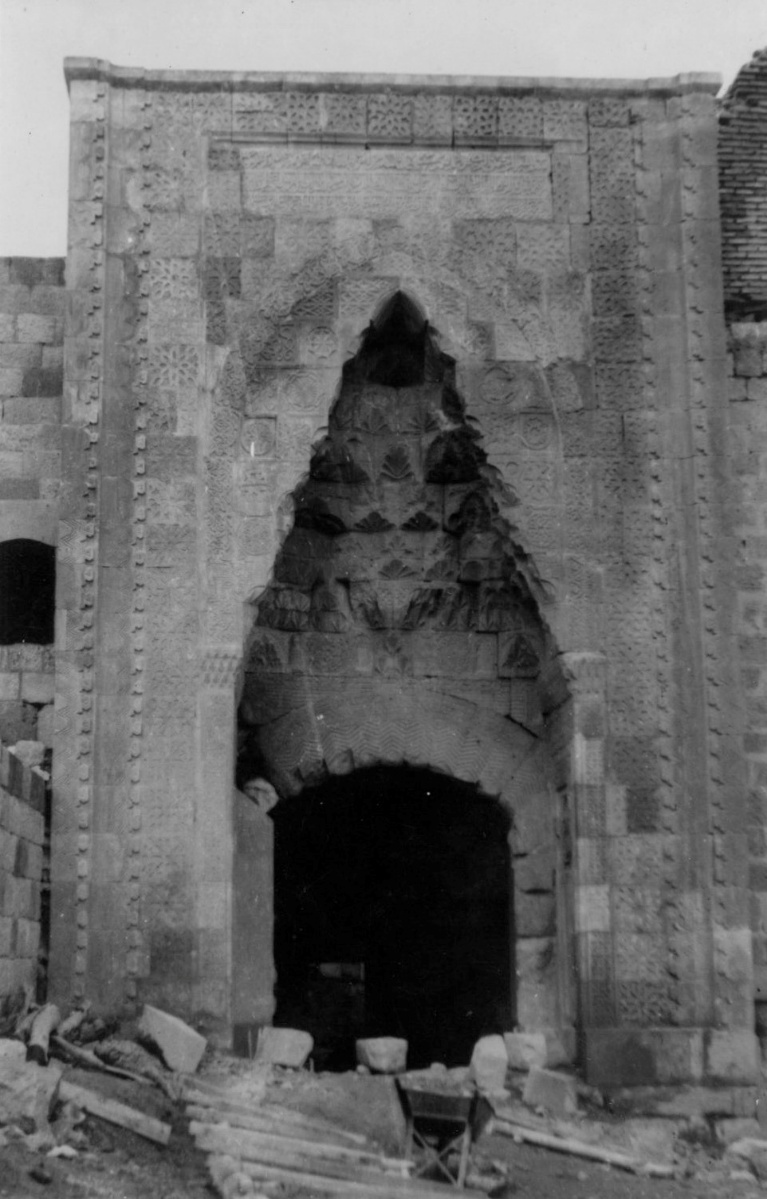
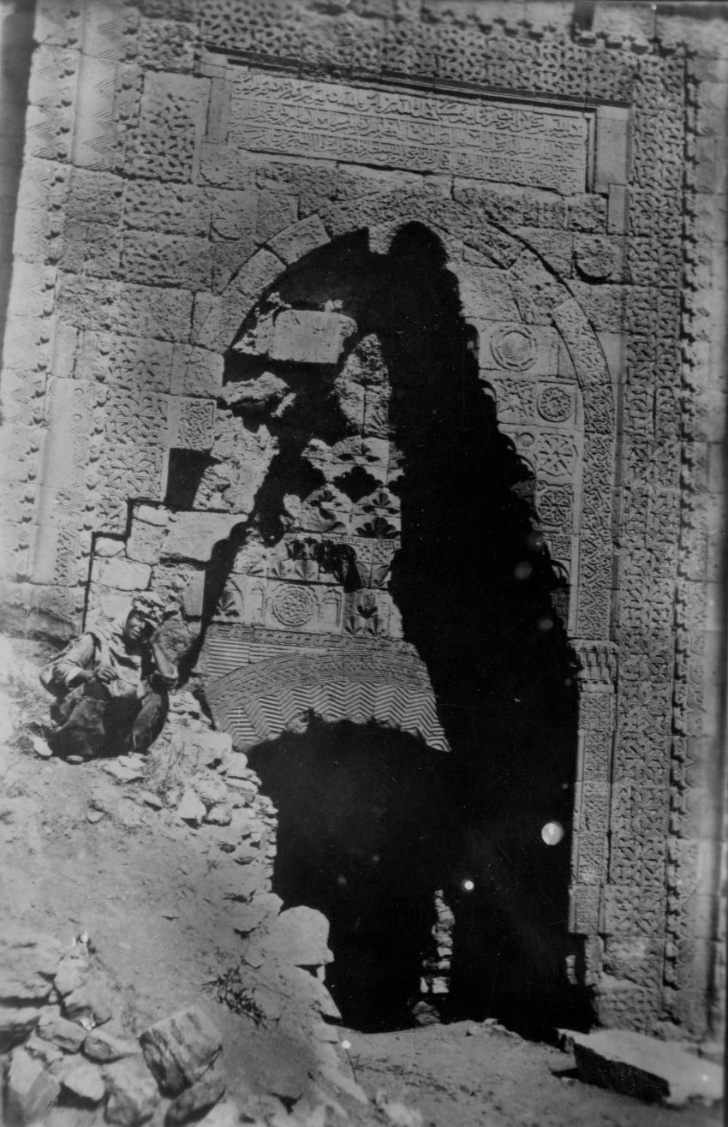
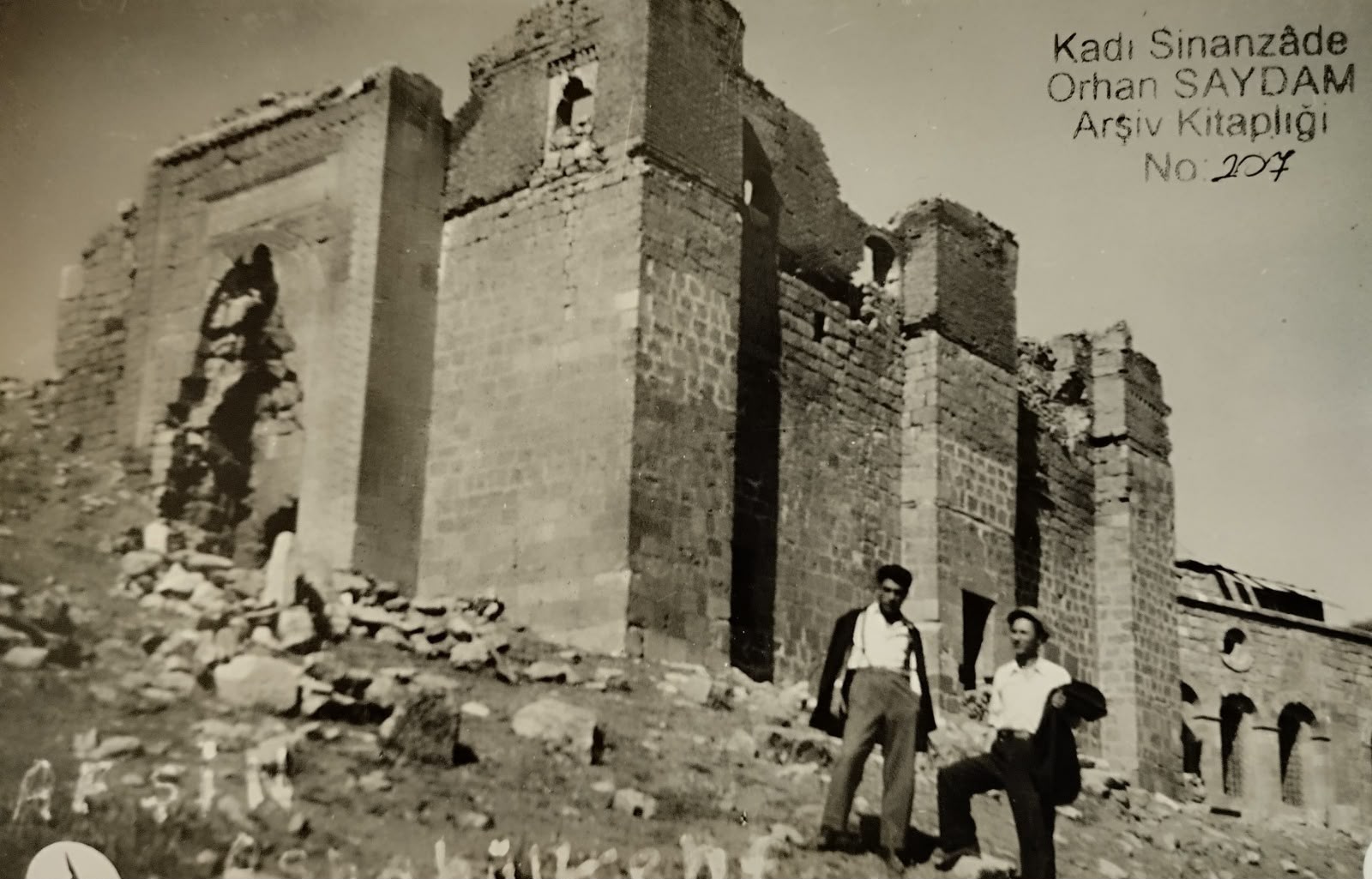
Archival photographs from the 1940s document the extensive damage the complex has suffered and its ongoing need for repairs.
Photographs from the 1940s, preserved in the Kadı Sinanzâde Orhan Saydam Archive Library, show that the main gate and the surrounding structures were heavily damaged and largely ruined at that time. These documentary photographs are historical sources that reveal the deterioration the complex has undergone over time and the importance of the restoration work being carried out today.
Following the February 6, 2023 Kahramanmaraş earthquakes, the complex was documented with official damage assessment reports.
Within the scope of the General Directorate of Foundations' (Vakıflar Genel Müdürlüğü) damage assessment study for foundation cultural assets following the earthquake of February 6, 2023, the caravanserai structure of the complex located in Emirli Neighborhood (block 172, parcel 17) in Afşin district was inspected on 16.02.2023; the structure, with a masonry load-bearing system and natural stone material, was determined to be lightly damaged (repairable level), and the report noted that although there was no need for emergency intervention, the ribat entrance/exit should be closed off and the standing walls should be shored up.
The other parts of the complex, consisting of the mosque, inn, and ribat sections, were recorded as "undamaged" during an inspection conducted by Taha Demirci and Özge Nihan Güleken on March 8, 2023, as no damage resulting from the earthquake was detected.
In line with the decisions taken at the Scientific Board meeting on September 24, 2025, a comprehensive monitoring and strengthening program is being implemented.
According to the decision of the Scientific Board, chaired by Prof. Dr. Kemal Kutgün Eyüpgiller, dated September 24, 2025, it was determined that a holistic assessment of the risks in the structure was necessary before any work could be carried out on the main gate, following an on-site inspection; it was decided to initiate survey and restitution studies, prepare a soil investigation/geotechnical report supported by material analyses and georadar scanning, conduct exploratory excavations in the foundations, and establish a vertical motion monitoring and instrumental observation system throughout the structure.
Among the decisions specific to the Ashab-i Kehf Complex are: monthly reporting of crack sensors at the ribat entrance, preparation of a survey of the ribat area and securing the main gate with a suspension system, resolving chronic water problems in the caravanserai and ribat structures with a drainage system and geopolymer resin injection (after consulting with Istanbul University Geotechnical Expert Assoc. Dr. Cihan Öser), renovation of the caravanserai roof with a metal-based pitched roof, crack repair on the ribat facade with Araldite-based injection and helifix rods, cleaning and renewal of the mosque mihrab joints and research scraping on the vaults, placement of an information panel at the cave entrance, and partial reconstruction of the risky perimeter walls with stainless steel fasteners.
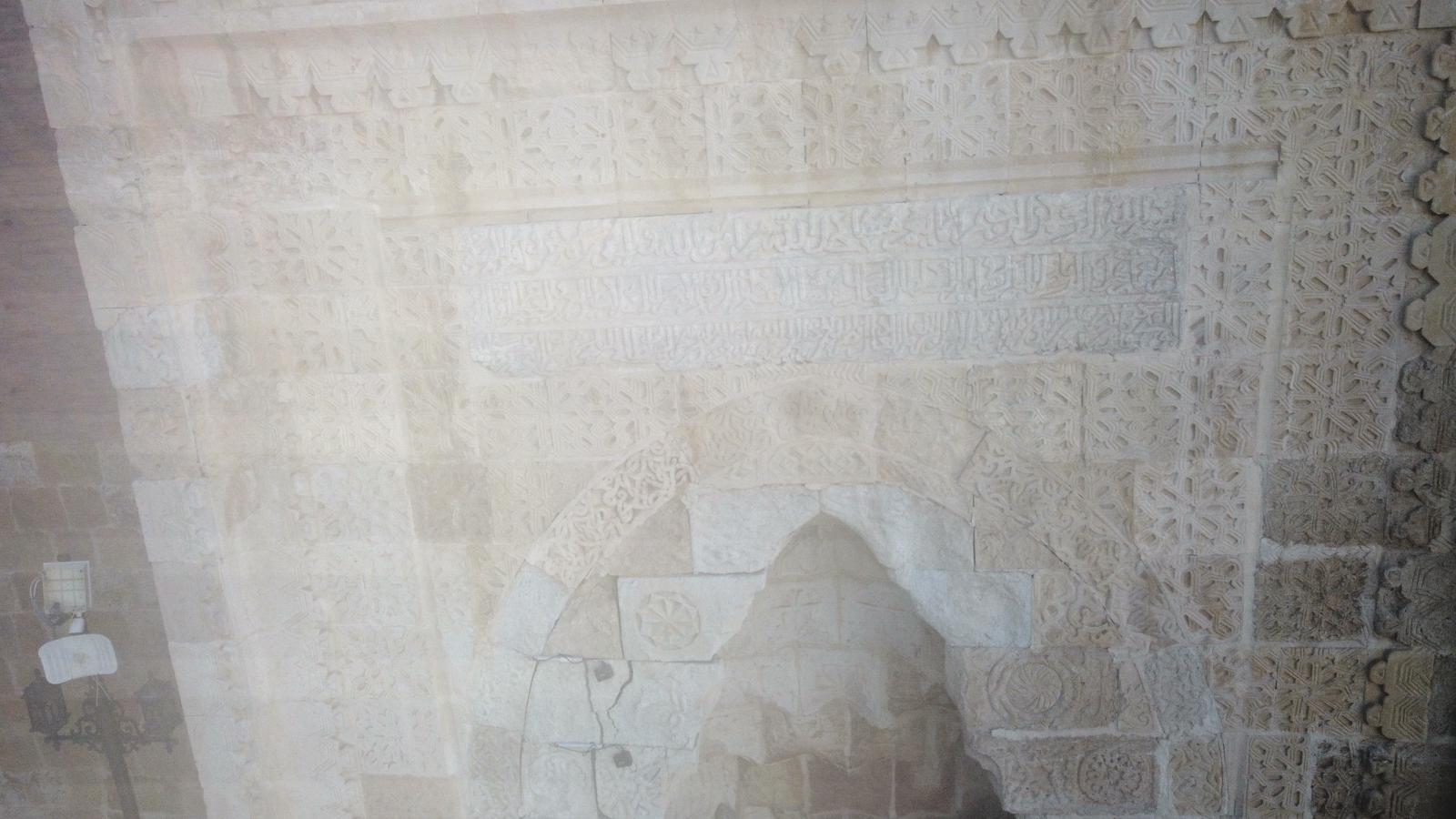
The main gate and inscription, reflecting the complex's unique stonework, are secured with a suspension and crack monitoring system.
In accordance with the Scientific Board's decision, the main gate will be suspended to ensure its structural safety after the suspension project is approved; crack sensors will be moved to other crack lines throughout the structure after the suspension is completed. The inscription and geometric-floral ornamentation program on the main gate are among the most original architectural elements of the complex, bringing the Anatolian Seljuk period stonework to the present day.
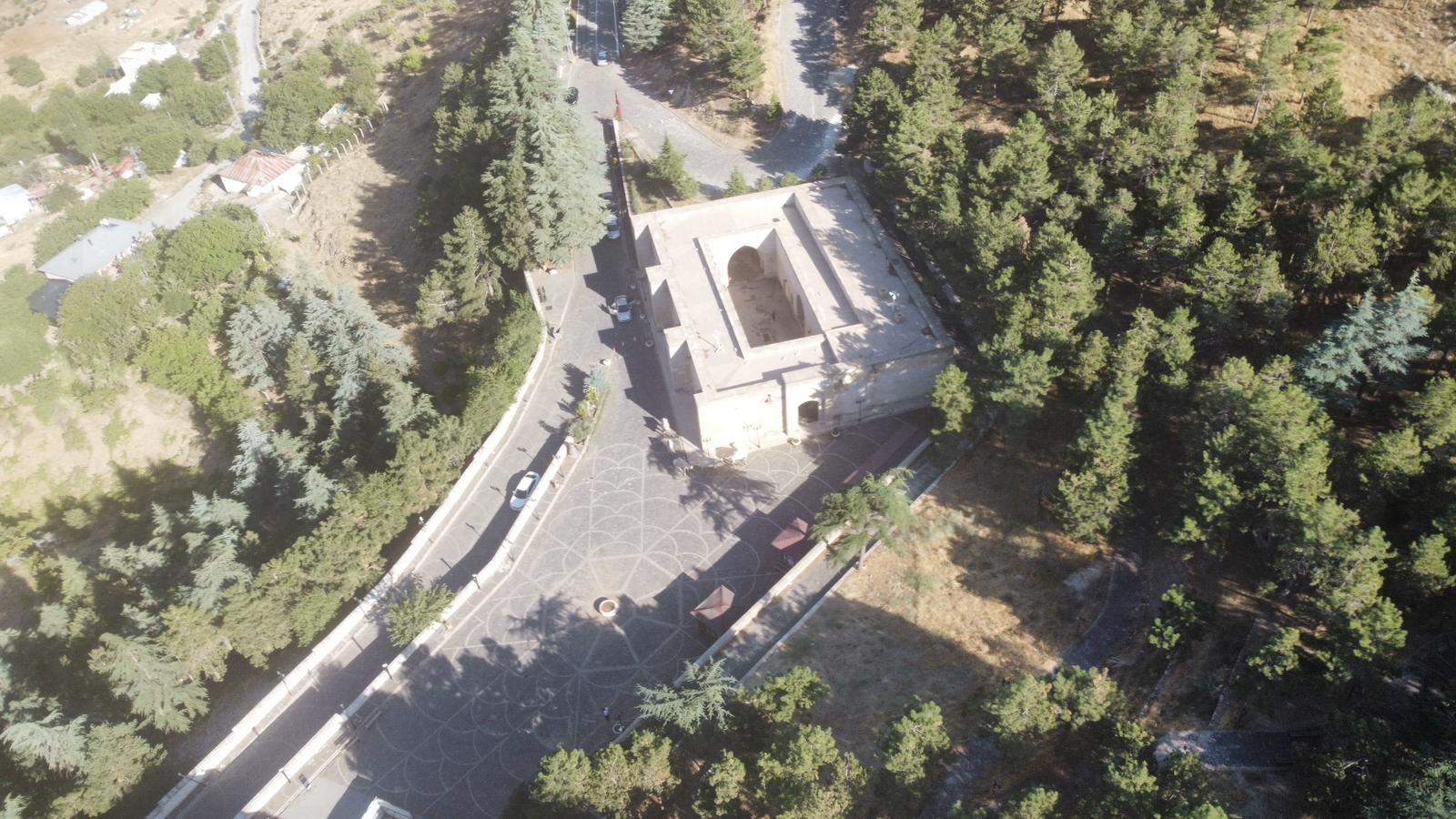
Fieldwork continues along with surveying, soil testing, and crack monitoring studies.
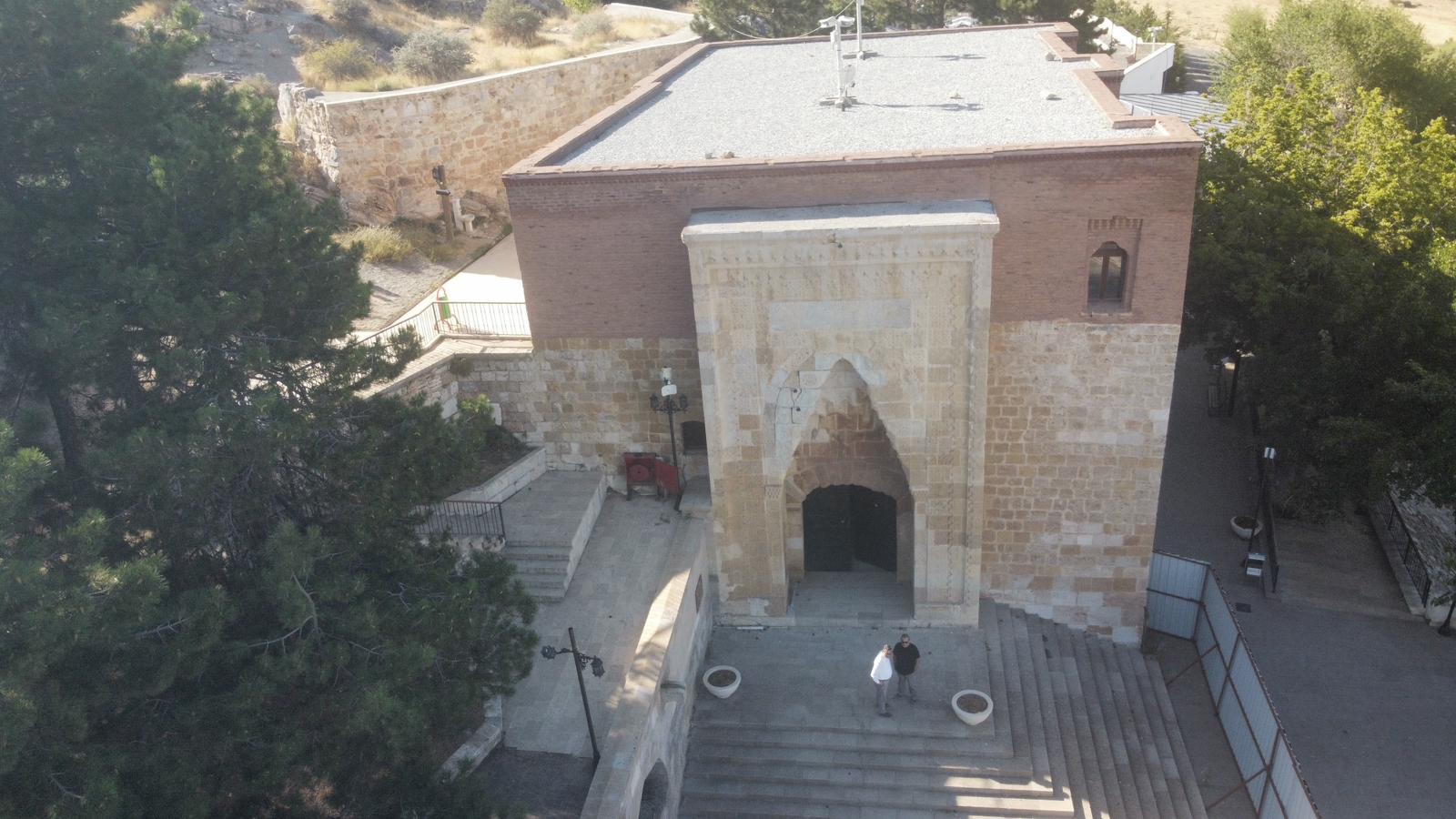
The following recent aerial photographs reflect the current state of the complex and its surroundings.
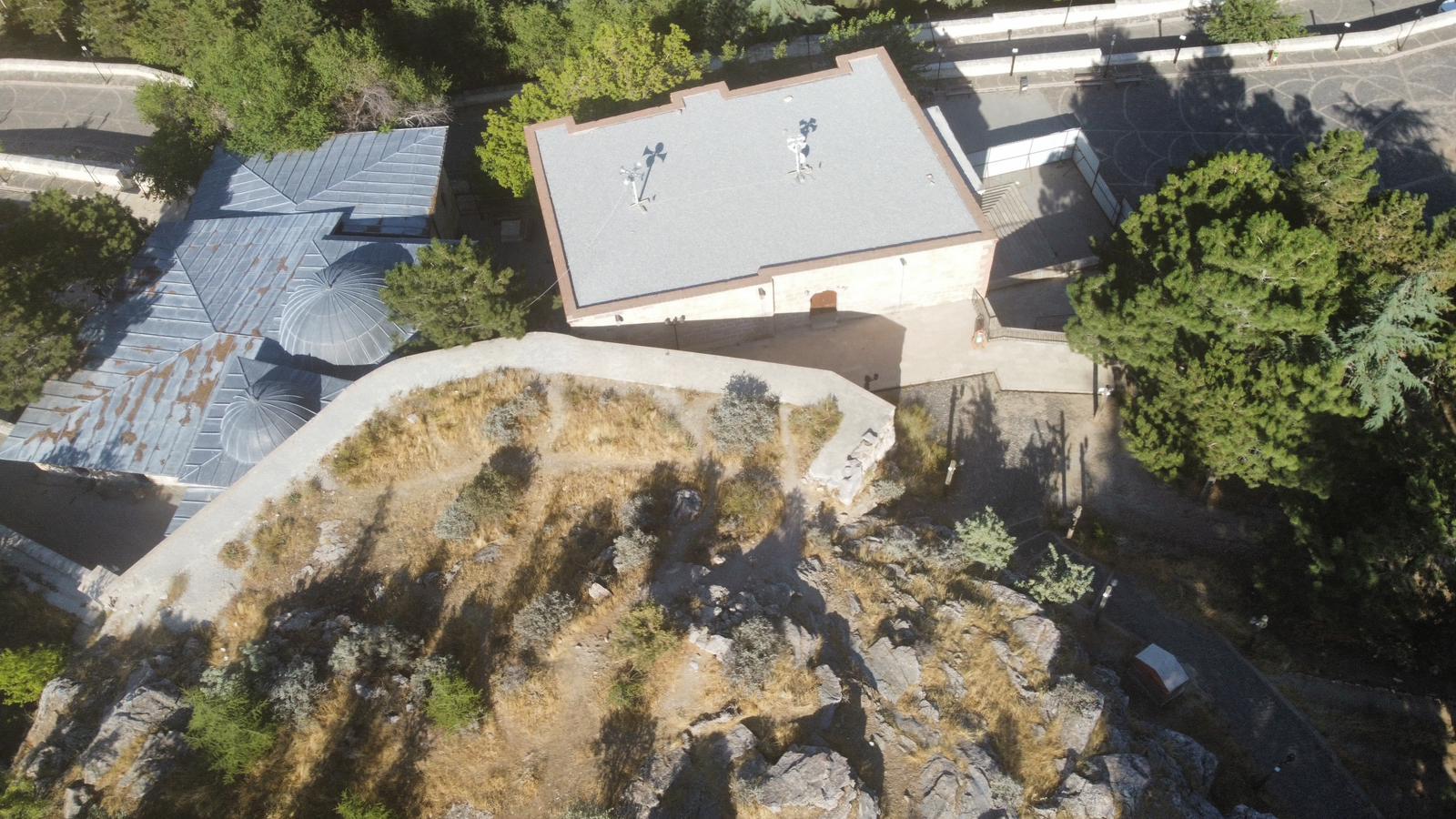
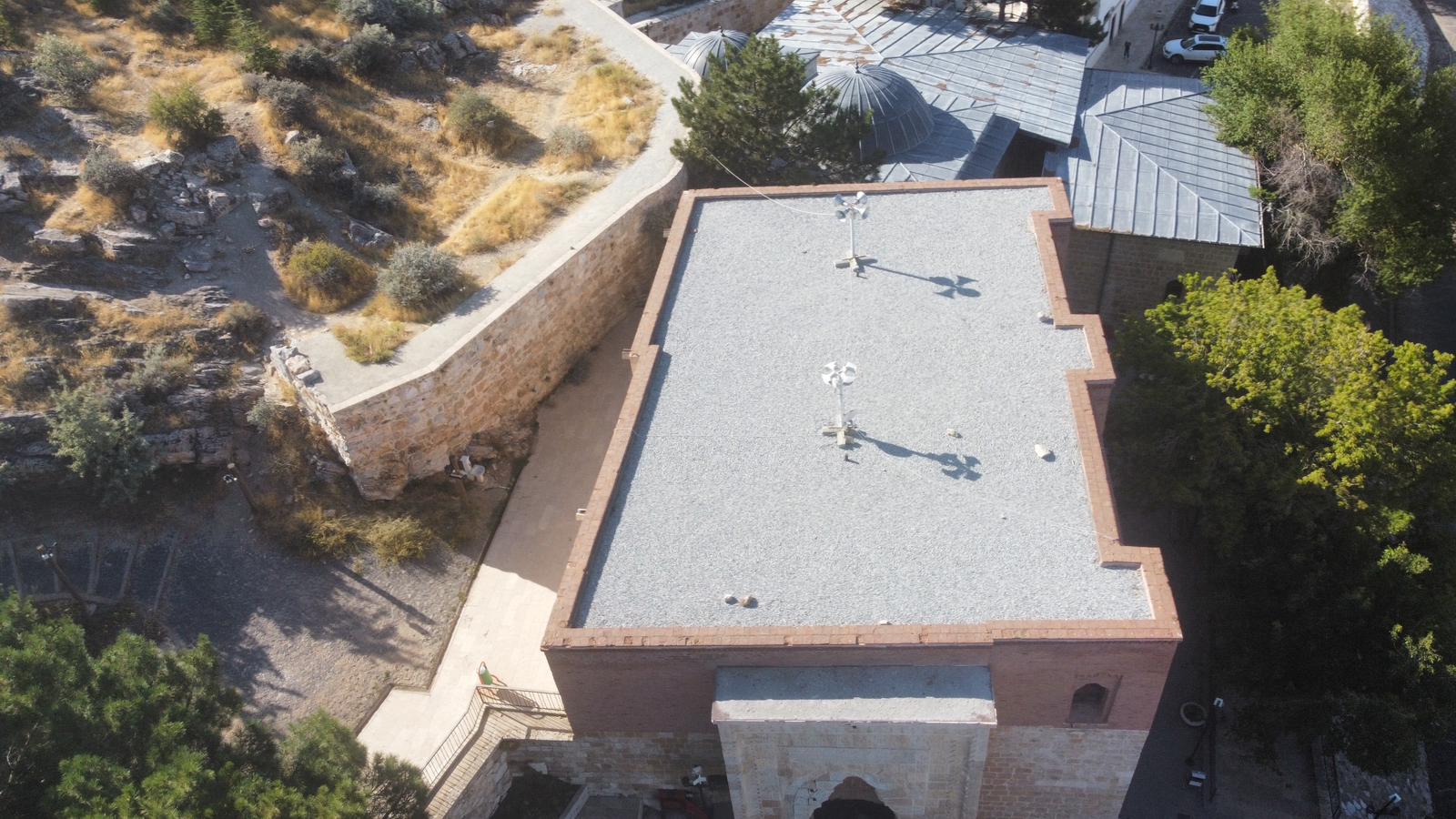
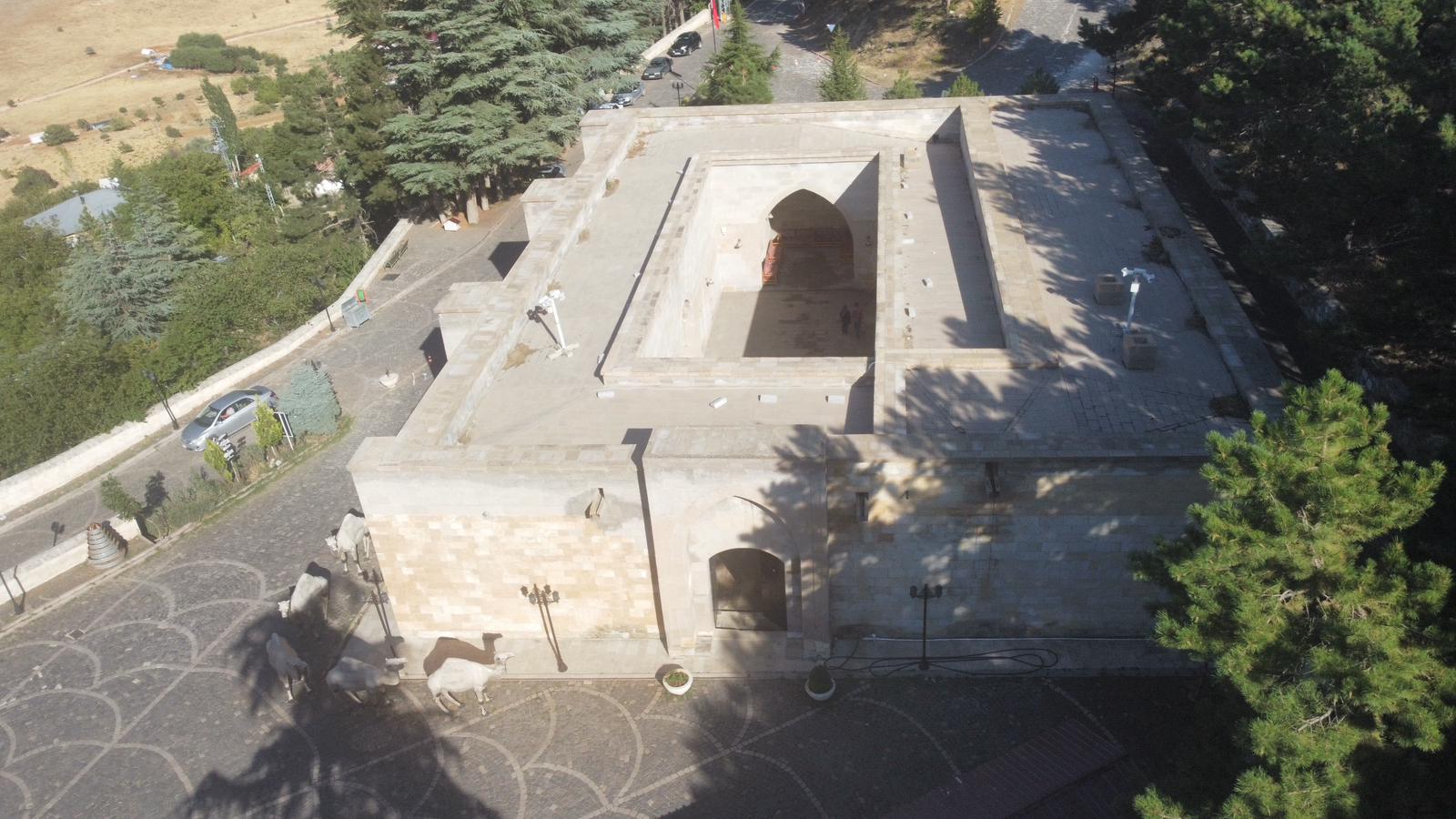
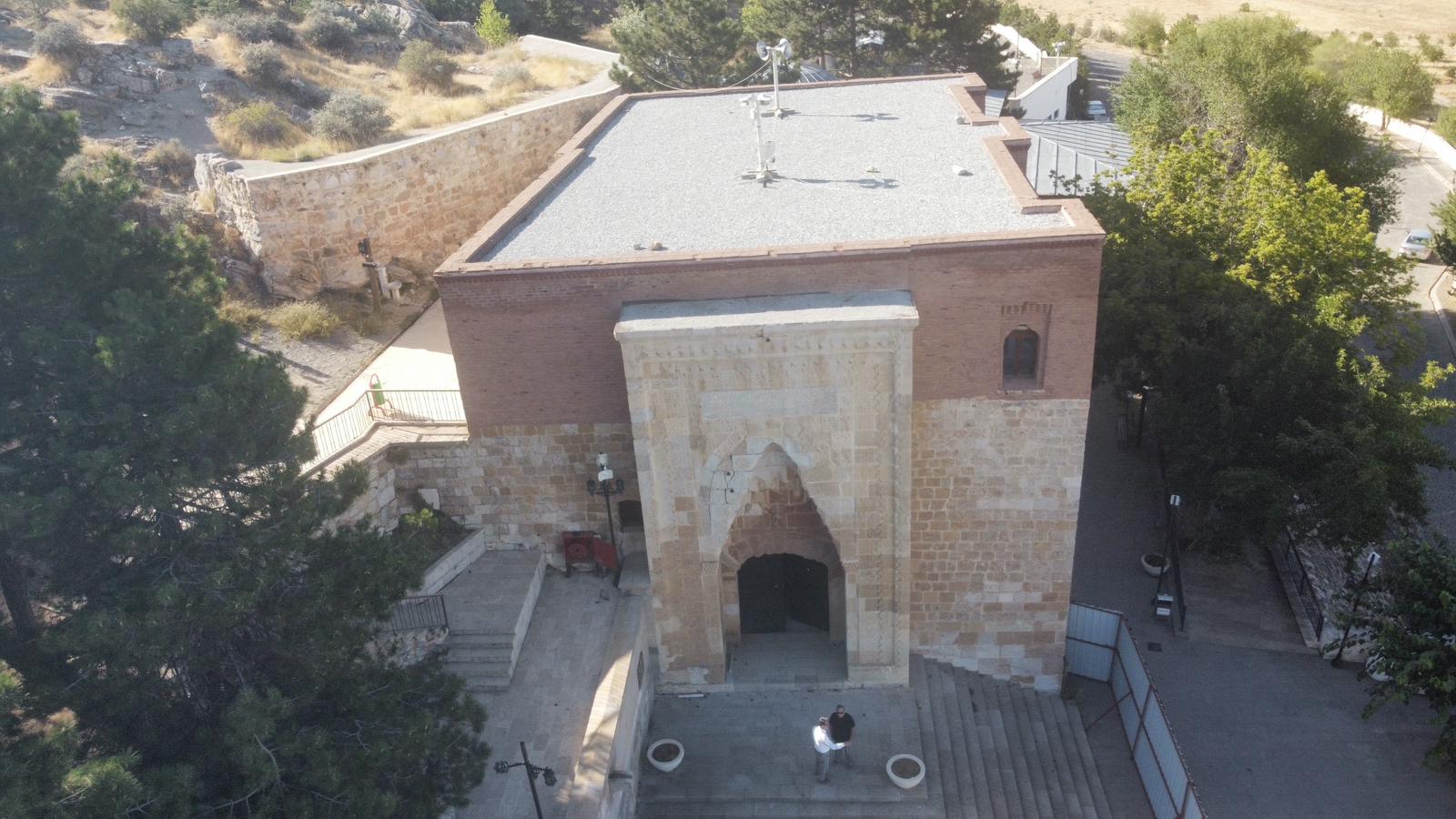
The implementation is being carried out under the supervision of an official control team and a scientific committee.
Contractor
Taksim Yapı Mimarlık İnşaat Restorasyon Turizm Sanayi ve Ticaret Ltd. Şti.
Control Team
Çiğdem Yeşilyurt (Architect), Süleyman Enez (Civil Engineer, MSc)
Scientific Committee
Prof. Dr. Kemal Kutgün Eyüpgiller, Assoc. Prof. Dr. Mehmet Selim Ökten, Prof. Dr. Bekir Eskici, Erdoğan Tunç (Regional Manager), Yahya Dilsizoğlu (Regional Coordinator)
The historic complex, considered sacred, is being preserved for the future under scientific supervision, maintaining its original architectural identity.
At the complex — identified with the story told in the Quran's Surah al-Kahf and developed in layers since the Anatolian Seljuk period — survey and restitution studies, soil investigation and georadar scans, a crack-monitoring system, shoring of the main gate, and waterproofing/drainage works are being carried out in line with the Scientific Committee's decisions. Implementation continues under the approved restoration project and the supervision of the official control team.